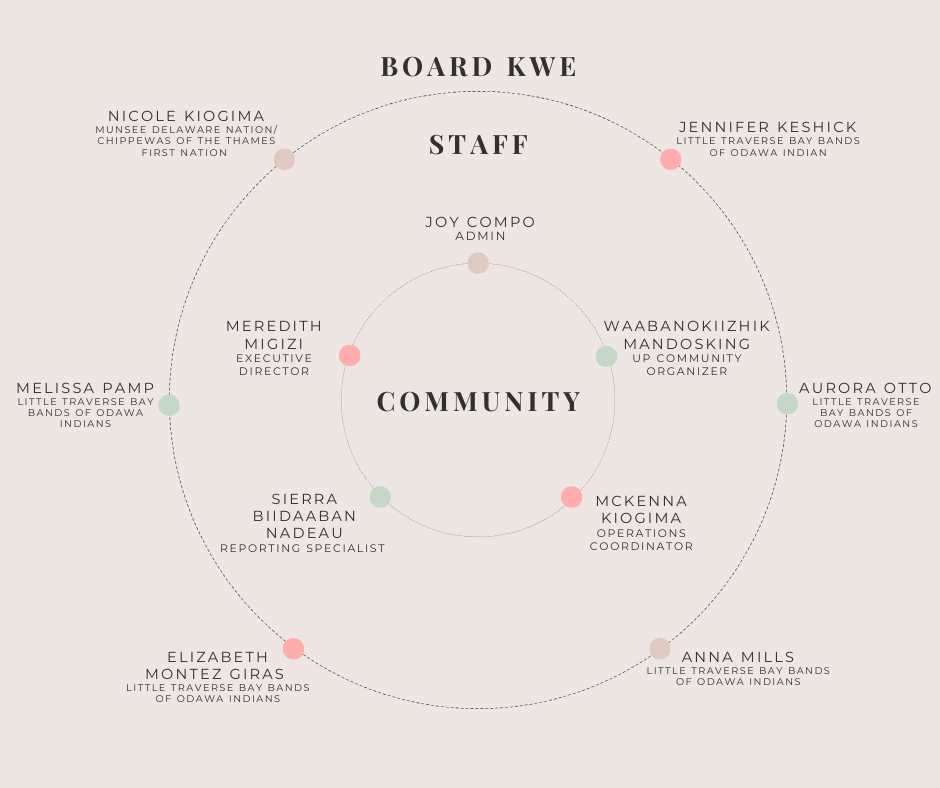
We had the opportunity to sit down recently with Meredith Migizi, Executive Director, and McKenna Kiogima, Operations Coordinator, at Miigwech, Inc., our March Cents of Community Recipient.
Miigwech is founded and led by Indigenous women. It is a 501(c)(3) nonprofit created under Tribal law, but it is not governed by a Tribal council. That means it is not part of the Little Traverse Bay Bands of Odawa Indians (LTBB) government, but it exists as an Indigenous nonprofit under the LTBB statute. Meredith proudly shared that they are the only organization of their kind east of the Mississippi.
When you walk into Miigwech, you’re invited to take off your shoes and slip into a pair of slippers because they often have little ones playing on the floor. The space is filled with craft supplies and tables for gathering, and the walls are lined with vibrant art showcasing Indigenous youth and many expressions of Mino-Bimaadiziwin — the good life in action.
Meredith explained that the organization is structured with a more matriarchal flow.
Miigwech addresses anything in the Indigenous world outside of fishing and treaty rights. Meredith shared that the word Miigwech is used today to mean thank you, but in its origins the word meant “I have what I need” and that is what Miigwech is working to ensure—that not only their Indigenous relatives have what they need, but also the greater community.
We learned quickly during our visit to Miigwech that when Meredith says “bet,” it means whatever problem needs solving, she’s on it. The scope of the work they do is vast, and in this piece we’ll only graze the tip of the iceberg.
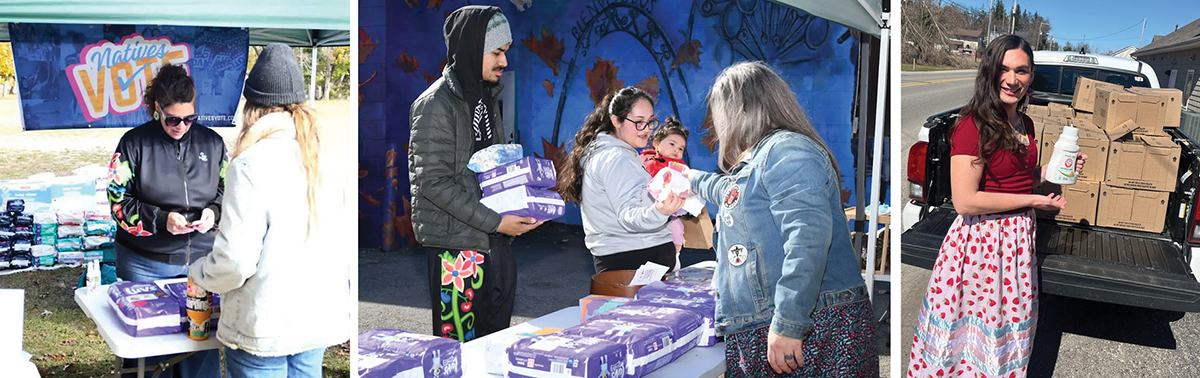
- Miigwech has a Doula Initiative where they are “reclaiming traditional ways for Indigenous communities.” Doulas are birth workers that support families preparing for birth, during labor and postpartum. Meredith reflected on how nooni, (Anishinaabe for nursing) is a part of a child’s first ceremony, after they pass through the sacred hoop (are born). Nooni is food sovereignty. Doulas help to support this ceremony and are now covered under Medicaid.
- Miigwech also holds diaper drives in Northern Michigan as well as in Detroit and Grand Rapids to make sure that families have what they need.
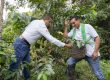
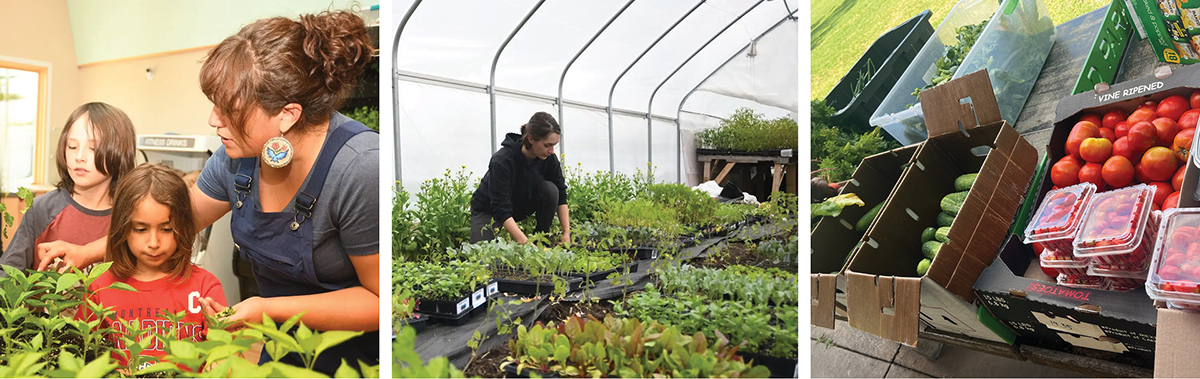
- In 2025 Miigwech funded a U-pick farm at Mshko’Ode in Brutus, that is open to the whole community. Another part of the farm was making up and delivering food boxes to Indigenous relatives in Grand Rapids and Detroit. Food security for all is very important to Miigwech.
- Another way Miigwech gave back to the broader community was during the 2025 ice storm. They partnered with HelpLink and stayed open, offering daily community meals and a warm space where people could charge essential medical devices and other electronics. They also provided laundry detergent, quarters for laundromats, and prepaid garbage bags for those who needed to clean out refrigerators and freezers after losing power. Just as importantly, they helped connect people who wanted to offer help with those who needed it most.
We asked Miigwech what they really wanted the community to know about them, and Meredith said, “We are trying to create the good life here. Not just with our Tribal community, but the greater community…And some of that starts with making sure that you have what you need. Our projects in our community are based off community needs. We respond in real time.”
Miigwech is also an educator. They hold treaty talks that share the traditional knowledge of what it meant when the treaties were signed for future generations. Meredith says, “People think of a treaty as paper, but it’s actually a living document.” They also offer an Anishinaabe 101 that explores U.S. policy and how it has affected Indian Country.
Sierra, their media specialist, offers sessions that break down misinformation and teach people how to look for credible sources, as well as how to make a FOIA (Freedom of Information Act) request. Miigwech also hosts information sessions on Indian Residential Boarding Schools and Blood Quantum.
Advocacy is another important part of their work. They recently published a Know Your Rights: Customs and Immigration 2026 Edition, a resource filled with education and practical information. Miigwech has also produced a document highlighting the 12 federally recognized Tribes in Michigan, serving as a Tribal ID reference for the Secretary of State. You can learn more about the SkoVoteden project here.
May 5th is National Missing and Murdered Indigenous Persons (MMIP) Awareness Day. Miigwech, Inc, is an official partner with the State of Michigan’s MMIP Task Force. You can learn more about this work here.
Ultimately, when you think of Miigwech, think of community. During our visit, they were preparing for Auntie’s Craft Night — an evening of traditional craft, home-cooked foods, and storytelling. The crafts range from ribbon skirts and shirts to moccasins, beadwork, or really anything someone wants to try.
Auntie’s Craft Night is open to anyone. Meredith said, “We don’t have anything that is not open to the greater public. A big misconception is that we are only for the Tribal community. No, when we put something out publicly, it’s meant for anyone wanting to come right now.”
She continued, “Do we hold space for Indigenous first? Absolutely. We really try to remove barriers for anyone who is wanting to come back to their Indigeneity.” The round-ups from Cents of Community will help support that work.
This month, we invite you to join us in rounding up for Miigwech and helping spread the good life in our community and beyond. What we’ve shared here is just the tip of the iceberg of the work they do. Keep an eye out for their next community offering — and remember, everyone is invited.
Until next time, keep cooperating and we’ll see you at the stores!