
November is Native American Heritage Month. What started as American Indian Day in 1916 evolved into a month-long celebration in 1990 to recognize the contributions of Indigenous Americans. Northern Michigan is located on the ancestral, traditional, and contemporary homelands of the Anishinabek (Odawa/Ottawa, Ojibwe/Chippewa, and Pottawatomi) people. With The Grain Train located on the homelands of the Waganakising Odawak (Little Traverse Bay Bands of Odawa Indians), the Anishinabek past, present, and future of this area runs deep and strong.
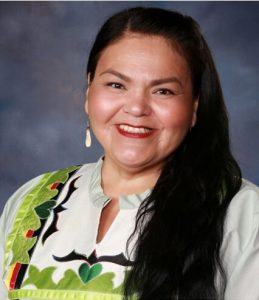
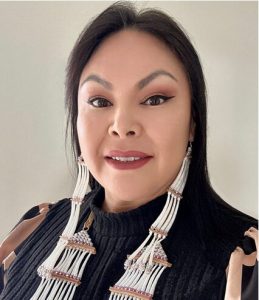
We had the opportunity to speak with Little Traverse Bay Bands of Odawa Indians (LTBB) Chairperson Winnay Wemigwase and Vice Chair Eva Oldman about the upcoming youth center. We also spoke with Gennie Morgan, an Elder of the Sault Ste. Marie Tribe of Chippewa Indians, who is working alongside Suzie Blume to open the Native Culture Center and Gallery in Cheboygan, Michigan.
LTBB Mashkawizii Youth Center
We sat down with LTBB Chairperson Winnay Wemigwase and Vice Chair Eva Oldman just before the groundbreaking ceremony for the LTBB Mashkawizii Youth Center on November 16. Chairperson Wemigwase shared that, having been born and raised in this area, a youth center has been a dream for the Tribe for a long time. It had not yet come to fruition, so it was high on both her and Vice Chair Oldman’s priority lists when they were elected to office in August 2025.
Chairperson Wemigwase reflected on the time when her aunts and uncles, along with Vice Chair Oldman’s mother, served on Tribal Council, saying, “Their initial intent for this particular property was to put as many tribal services on it as possible, so that our citizens do not have to drive all over Emmet, Charlevoix, and Cheboygan counties to get services.”
Upon coming into office, she knew she wanted to be as healthy in body, mind, and spirit as she could be for the job ahead. Having a lodge at the government center was part of that plan. The lodge is also a reminder of a time long before there was a modern government building and long before the Tribe was reaffirmed by the U.S. government. The lodge was where they would gather and make important decisions.
She was also asked about putting a sweat lodge there. Now, on nights when she is working late or dealing with something challenging, she can look outside and see feet and chairs in the lodge, with a fire going as they prepare for a sweat. Seeing that taking place outside brings her comfort.
There are biweekly lodge teachings, which she sees as part of the youth center’s broader purpose: centering on who LTBB are as a people and providing a place to focus on what their ancestors maintained for them. At the same time, it is about making sure they are doing their part to pass that knowledge on to the next generation.
Finding the capital for a project like the youth center was, she described, a lesson in perseverance, patience, and creativity. Having the center on tribal property was important so they could create a lasting place. In addition to state funding, Chairperson Wemigwase had the idea to explore whether Opioid Settlement Funds could be used for construction.
She and Vice Chair Oldman went to Tribal Council to see if they would be interested in working with them on the project. All three branches of the Tribal government work together to bring projects like this to life. Though the youth center was not the only consideration for the opioid settlement funds, they worked together to bring this dream to life. The statute was written, and legislation for the Mashkawizii Youth Center was passed.
Mashkawizii means, “He or she, that person has inner strength.”
Chairperson Wemigwase said, “The youth center idea is based on prevention. If we have a place that’s focused on youth, and it provides them their own environment and we can bring in prevention services at the same time, then the way that I look at it is we’re catching them before they fall in the river and not further downstream.”
With legislation passed, the Executive Branch could begin putting out proposals for someone to design the building. They ultimately chose a Native-owned company, connecting Michigan Tribes to the larger economy of Indian Country. “There are so many Tribes out there that are doing intertribal business together, and we haven’t really gotten into that stream yet, and we thought that this might be a good opportunity to do that.”
They also decided to go with a modular building and contracted local companies to clear the area and prepare the site so the building can be delivered, placed, and put into use. This is phase one of the project. Phase two is projected to include a gymnasium for youth activities that will also serve as a rain location for the powwow.
When talking about the program, Vice Chair Oldman shared, “Our youth are our future leaders. We think that they’re our little spirits and that we have to take care of them and teach them our worldview and understand who they are as Anishinaabe people. Because it’s really important to learn that as a younger child, to build that foundation for them, so that when they get older, they can navigate through life a little bit easier. And as a tribe, we’re here to support one another. We’re a government, but I like to say that we’re actually a family with a government label slapped on that. We’re here to support our family and our precious youth.”
Chairperson Wemigwase expressed hope and excitement for the many groundbreaking and ribbon-cutting ceremonies to come, but she was especially proud of this one. It was the first project she had helped bring to fruition, making it a true labor of love.
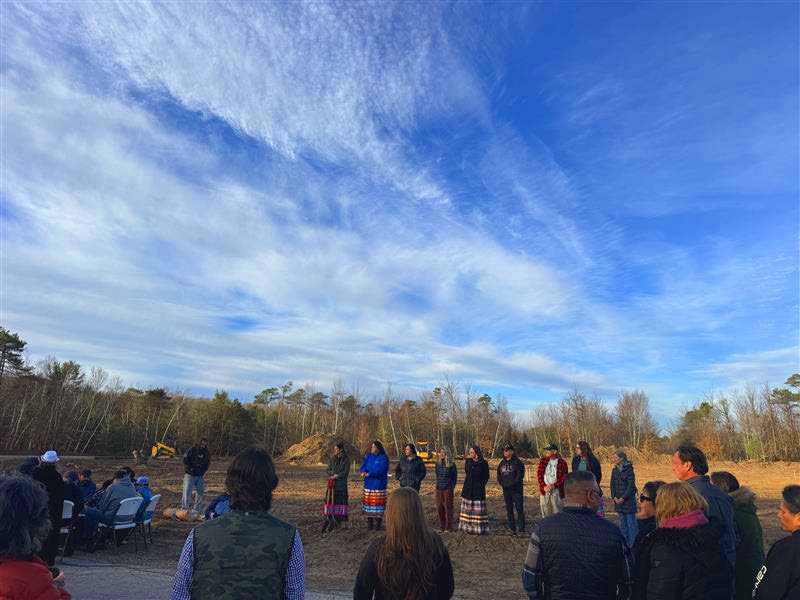
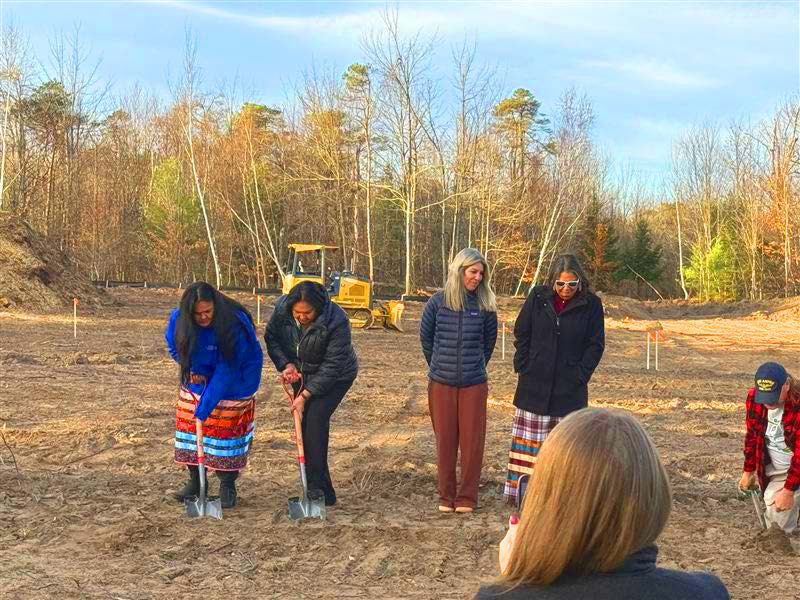
Following our conversation with the Chair and Vice Chair, we had the honor of attending the Mashkawizii Youth Center groundbreaking ceremony. Children played on the cleared earth as the Drum played a welcome song. A pipe ceremony was held, and the Chair, Vice Chair, and Tribal Council members took symbolic shovelfuls of the soil that will become the foundation of the center. Community members placed tobacco on the land, offering their prayers and dreams. It was a beautiful display of community, tradition, tribal sovereignty, and heritage that is not only alive but thriving.
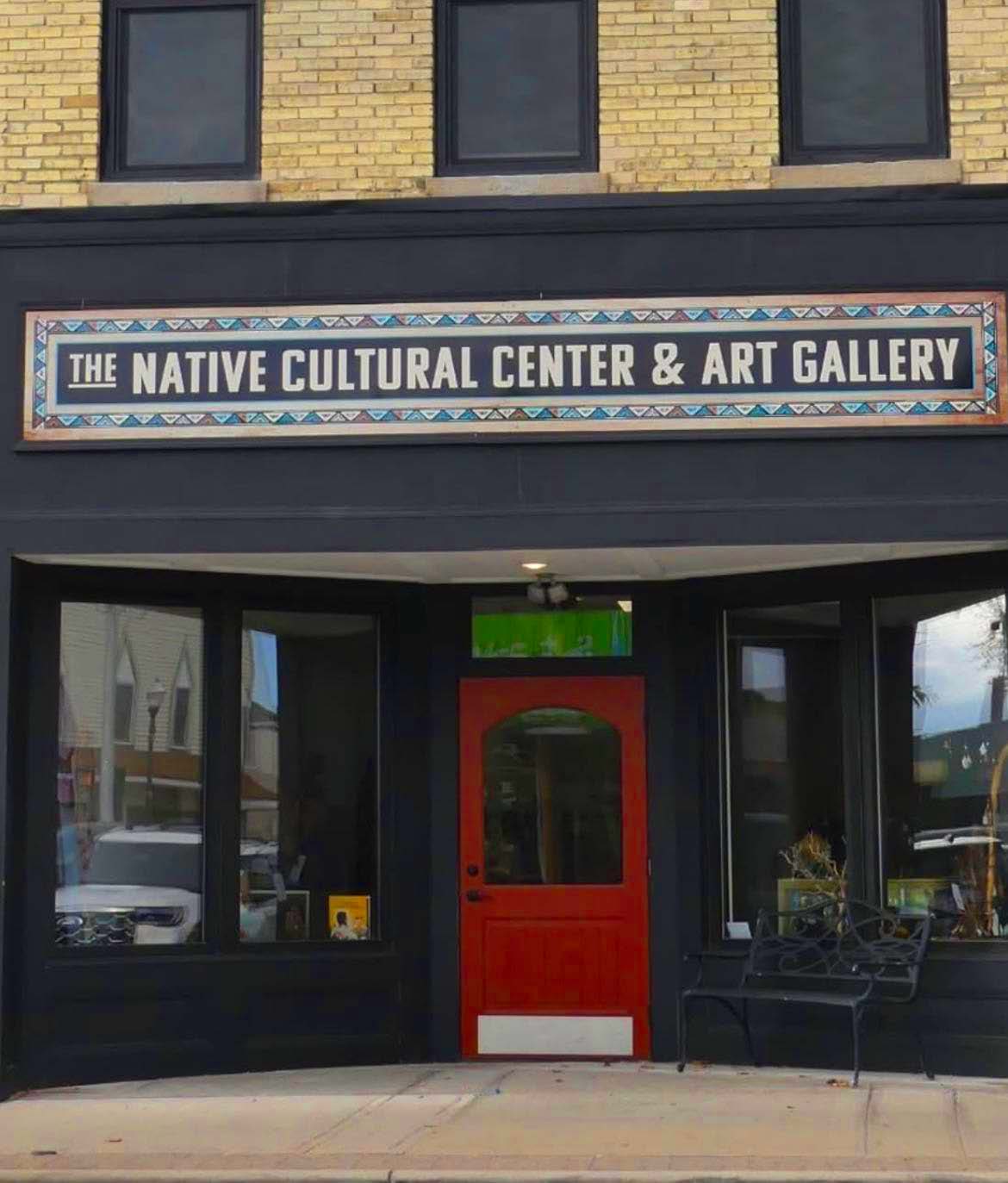
Native Culture Center and Gallery
Gennie Morgan is passionate about sharing her culture and traditions with the greater community. She started the Grandmother Moon Drummers, a women’s drum group, in 2010. She specializes in teaching about the four directions and the medicine wheel. We caught up with Gennie at the Native Culture Center and Gallery in Cheboygan as she was getting ready to share a teaching with the local youth hockey team.
The hockey team’s coach had come into the Center and asked Gennie what might be a good animal for the boys. Gennie said, ” let me think on it” and put down some tobacco for guidance. What came to her was the wolf, because,
“The wolf is humility. And the wolf is going to bring these boys back into being themselves, as far as a pack. Working together and being strong together. You’re not just one person, you’re not better than anyone else…They’re still in that southern direction, (the) youth, where they’re still growing.”
That was the lesson Gennie was taking to the team the afternoon we spoke. She is also offering a teaching on Spirit Animals on Friday, December 11, from 6-8 p.m. at the Center.
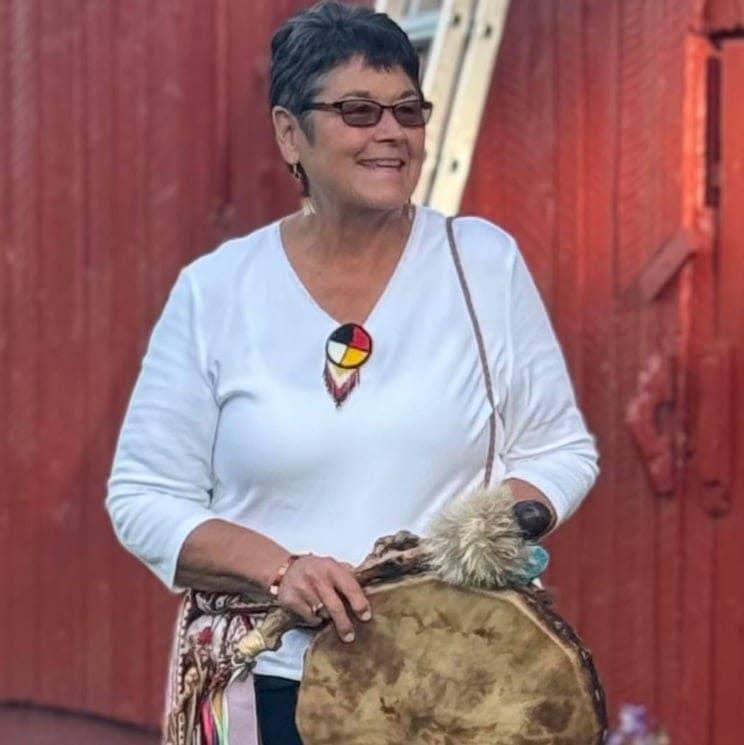
When talking with Gennie about the Center, she said, “Our goal is to educate the community, Native or non-Native, and to bring the awareness of all the teachings, the seven grandfathers, the four directions, the medicines we use and why we use them. Drumming, why the songs are sung for the reasons we drum them.”
Gennie and Suzie have been planning the Center since May 2026, and a lot of things have fallen into place. As Gennie said, “I know that’s a message from Creator that we’re doing good here.”
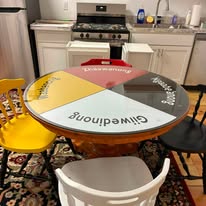
Gennie shared the story of a medicine wheel table that was gifted to the Center and explained how it helps keep them grounded and centered. She said, “That’s a daily thing, you know? We live this culture every day…It’s a way of life, and that’s what we really want to get the community to understand.”
Gennie shared that a drumming group will begin at the Center on December 5, with gatherings planned for every other Saturday from 1:00 to 2:30 p.m. This group is open to everyone. There will also be Indigenous cooking classes that include harvesting, along with many other programs planned for the Center.
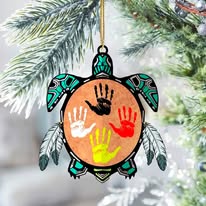
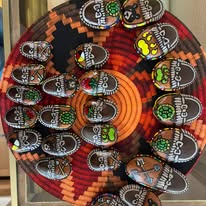
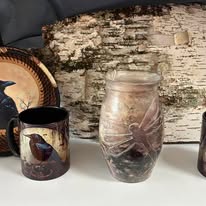
The Center is also a gallery and gift shop, and they are currently looking for more Indigenous artists to feature. We got a little sneak peek at what they will be carrying, and there are some beautiful goods at the Native Culture Center and Gallery, including favorites like Virginia Sweetgrass and Toni Gasco’s vibrant handprinted stones.
The Native Culture Center and Gallery is not just for Cheboygan. Gennie envisions people from all across Northern Michigan, as well as those visiting the area, coming together in this space. She said, “You know, it is a blessing, the culture, that is another thing I would really like people to understand here, is that we’re not here to take over, we’re here to have Native and non-Native people come gather and share the center with community. We can gather together in a circle, where no one is left behind!”
The Native Culture Center and Gallery on will be open Thursdays, Fridays, and Saturdays 10 am – 4 pm during the winter months. Join them on Thursday, December 3rd for Hospitality night where they will be open from 12 pm – 7 pm. Winter hours will follow on Friday, December 4th.
Chi Miigwech (Thank you very much) to Chairperson Wemigwase, Vice Chair Oldman, and Elder Gennie Morgan for sharing their passions, dreams, and culture with us. There are so many different ways to celebrate Native American Heritage Month. Just look around and see what is happening in your community and beyond.
Until next time, keep cooperating and we’ll see you at the stores.